SEBI’s December 2025 LODR/RPT Shift: What Listed Companies Need to Re-check Internally
SEBI’s December 2025 RPT changes are not just threshold changes. Listed companies should re-check definitions, subsidiary transactions, carve-outs, Audit Committee papers, approvals, and disclosure workflows.
- sebi
- lodr
- related party transactions
- rpt
- listed companies
- audit committee
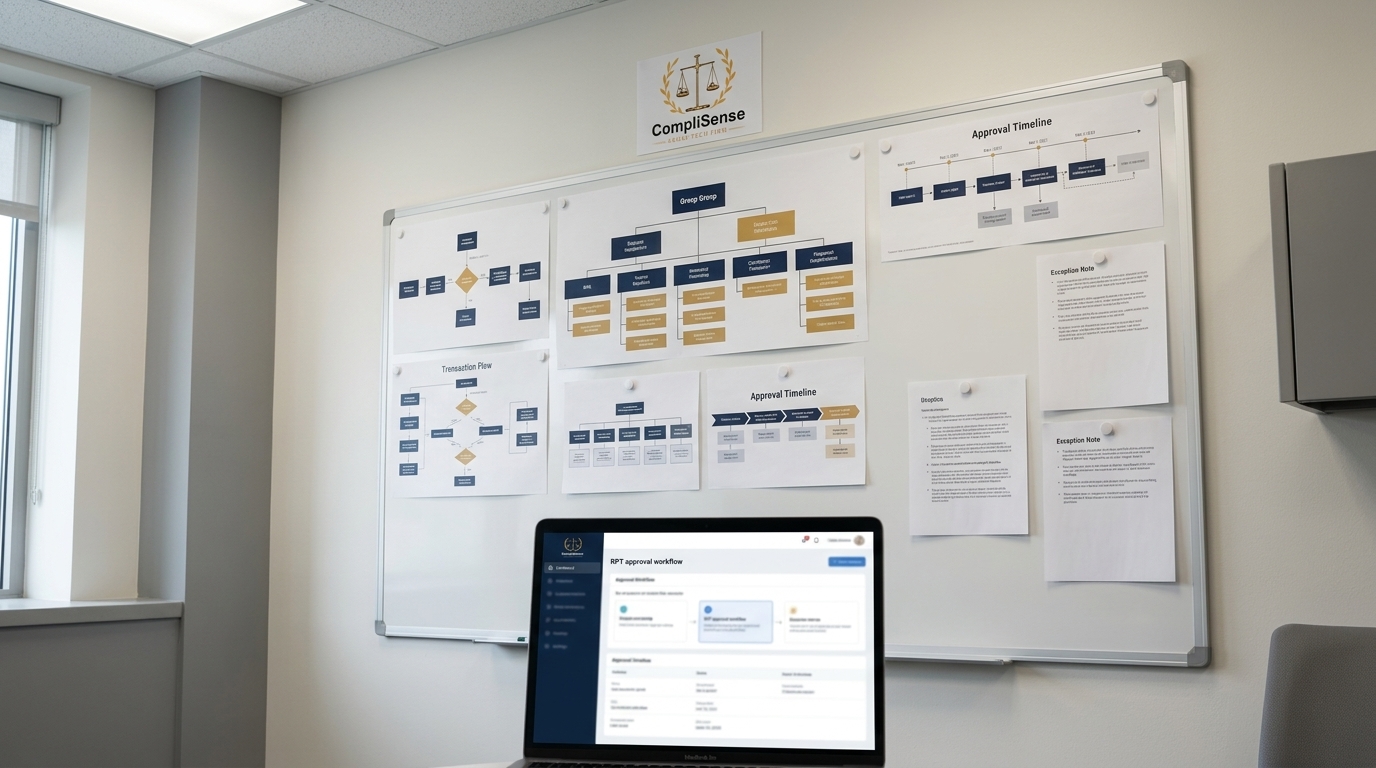
SEBI’s December 2025 change to the LODR related party transaction framework should not be treated as a routine legal update.
For listed companies, the practical impact is much wider than changing one threshold in the RPT policy. The change affects how transactions are identified, how subsidiary transactions are routed, how exemptions are tested, how Audit Committee papers are prepared, and how shareholder approvals are tracked.
That is why the first internal re-check should begin with definitions.
Under the amended framework, companies need to revisit the exclusion for certain transactions that are not treated as RPTs. The earlier wording around benefits or transactions involving directors and employees has been refined to specifically cover directors, key managerial personnel, and relatives of such directors or KMPs of the listed entity or its subsidiary, where terms are uniformly applicable. This sounds like a drafting change, but operationally it can affect how HR benefits, employee schemes, director-related arrangements, reimbursements, and group-level benefit plans are classified.
The test should not be whether the transaction was historically treated as exempt. The test should be whether the exemption still holds under the revised language.
Compliance and legal teams should therefore prepare an exception register. This register should capture transactions that the company currently excludes from RPT treatment, the basis for exclusion, the beneficiary group, whether the terms are uniformly applicable, and the internal owner who has certified the position. Where a benefit or transaction is available only to selected individuals, relatives, promoter-linked persons, or a narrow management group, the company should re-check whether it can still sit outside the RPT framework.
The second major re-check is materiality.
SEBI has moved from the earlier fixed threshold approach to a graded turnover-linked materiality framework under Schedule XII. For many large listed companies, this may change the point at which a transaction becomes material and requires shareholder approval. But this should not be read as a simple relaxation. It also creates a need for a clean annual computation process.
The company should calculate the applicable Schedule XII threshold at the start of the financial year using the last audited consolidated turnover. That threshold should then be built into the RPT register, ERP approval logic, secretarial tracker, and Audit Committee note templates. If the number sits only in the legal team’s working file, it will not control actual transactions.
The third and more difficult area is subsidiary-level RPTs.
The amended framework strengthens listed-parent oversight over RPTs entered into by subsidiaries, even where the listed company itself is not a party. This is where many compliance gaps can arise. Subsidiaries may negotiate contracts locally, finance may process payments through group systems, and legal may review agreements at subsidiary level without routing them to the listed entity’s Audit Committee in time.
Listed companies should therefore create a group-wide RPT intake mechanism. Every subsidiary should be required to report proposed transactions with related parties of the listed entity or the subsidiary before execution. The reporting format should capture the counterparty, relationship, transaction value, cumulative value during the year, standalone turnover of the subsidiary, whether the subsidiary has one year of audited financials, and whether approval of the listed entity’s Audit Committee is triggered.
Newly incorporated subsidiaries require particular care. Where audited standalone financial statements are not available for at least one year, the approval test may need to be applied using paid-up share capital and securities premium, based on a date not older than three months before seeking approval. This means the finance and secretarial teams must keep updated capital data ready. Without that, approval papers may be delayed or based on stale numbers.
The fourth re-check is the Audit Committee paper itself.
Many companies already place RPT notes before the Audit Committee. But after the June and October 2025 developments around minimum information, the quality of the note matters. The committee should not receive a generic agenda item saying “approval of related party transactions”. It should receive a decision-ready paper.
At minimum, the internal paper should clearly state the related party relationship, nature and tenure of the transaction, monetary value, cumulative value, commercial rationale, pricing basis, benchmarking or arm’s length support, whether the transaction is ordinary course, whether it is material, whether it involves a subsidiary, whether any exemption is being relied upon, and whether shareholder approval is required.
The paper should also separate new approvals from renewals, modifications, ratifications, and omnibus approvals. A continuing arrangement should not be approved casually as if it were a fresh one-time transaction. The committee needs to see what has already been approved, what has been utilised, what remains unutilised, and what is being changed.
The fifth re-check is shareholder approval validity.
The amendment clarifies the validity of omnibus shareholder approvals for material RPTs. Approvals obtained at an AGM are linked to the next AGM held within the Companies Act timeline. Approvals obtained through other general meetings cannot exceed one year. This requires a separate approval-expiry tracker.
Companies should map every material RPT approval currently in force and record the approval date, meeting type, approved limit, approved parties, approved transaction type, utilisation, expiry date, and renewal requirement. This should be aligned with the annual general meeting calendar. If a transaction is expected to continue beyond the approval validity period, the renewal item should be planned before the approval expires, not after finance or business raises an urgent payment request.
The sixth re-check is disclosure workflow.
RPT compliance should not end with approval. Listed companies should ensure that stock exchange disclosures, half-yearly RPT disclosures, financial statement disclosures, board/Audit Committee minutes, and website or annual report references are aligned with the same source data. If the RPT register, finance ledger, secretarial records, and disclosure file are maintained separately, inconsistencies are likely.
A strong process should have one controlled RPT master file. Changes to related party lists, KMP details, relatives, subsidiaries, approval limits, exemptions, and transaction utilisation should flow into this master file. Disclosure should be generated from this controlled source, not manually reconstructed every reporting cycle.
The final re-check is ownership.
RPT compliance cuts across legal, secretarial, finance, procurement, business, HR, subsidiaries, and the Audit Committee. If ownership is unclear, the company may have good legal interpretation but weak operational control. Each stage should have an owner: identification, classification, threshold computation, exemption review, committee note preparation, approval tracking, utilisation monitoring, and disclosure.
SEBI’s December 2025 LODR/RPT shift is therefore best understood as a governance workflow change. The companies that respond well will not merely update their RPT policy. They will update their registers, approval papers, subsidiary reporting, exception testing, shareholder approval calendar, and disclosure controls.
Related compliance hubs
Continue from this explainer into topic hubs that connect analysis with regulator updates and workflow context.
Related regulator archives
Continue into source-linked archives for regulators connected to this topic area.
Related articles
Continue with related analysis selected by the editorial team or sharing the same topics.
Related legal updates
Source-linked updates that place this article in the current regulatory workflow.
Content accountability
Prepared by CompliSense Editorial Desk (Regulatory Content Team) and reviewed by CompliSense Regulatory Review Desk (Compliance Review Team).
This attribution reflects the preparation and review roles used for CompliSense regulatory publishing.